Establish the Policy
Charles IT works from your organization’s approved software needs and application-control requirements to define what should be permitted on scoped devices.
Control which applications can run on managed endpoints with policy-based approvals and security-team review built for organizations that need a higher level of software governance.
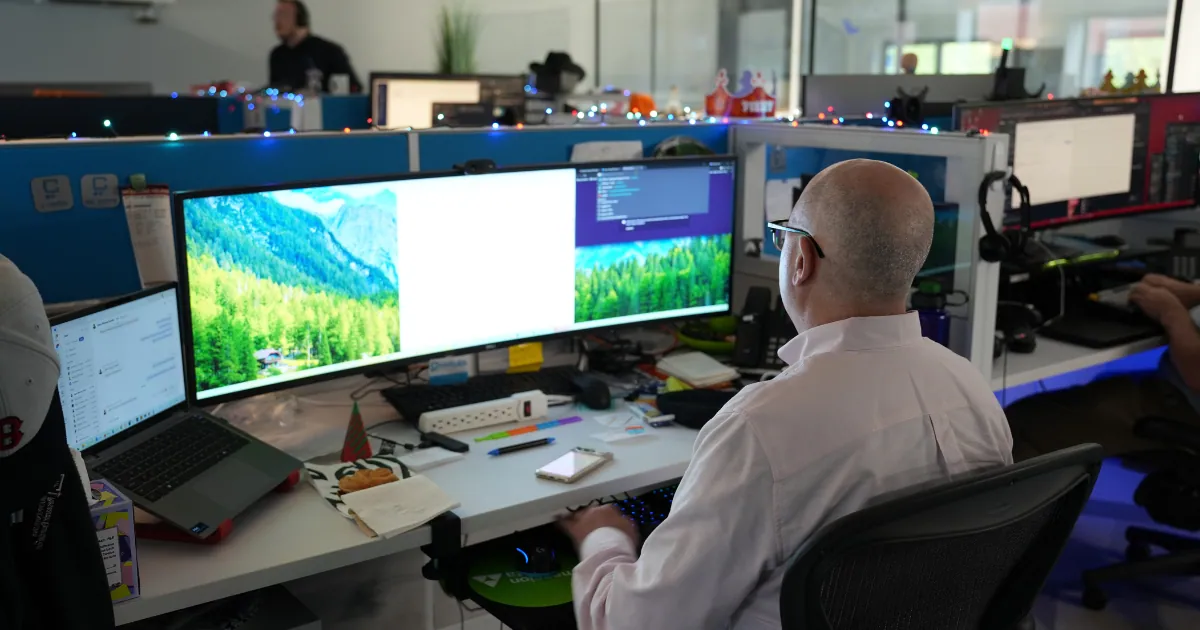
Endpoint protection can identify malicious files and suspicious behavior, but organizations with stricter security requirements may also need control over whether software is authorized to run in the first place.

Software decisions made device by device can make it difficult to maintain a consistent application policy across managed endpoints.
Without application control, unapproved software may run before IT or security teams have reviewed the business need.
Application exceptions can become difficult to trace, repeat, or explain when there is no centralized review process.
Internal teams can spend time investigating software after it appears instead of controlling application execution up front.
Charles IT helps establish and manage an application-execution policy across agreed endpoints, providing greater control over approved software and a defined process for handling legitimate exceptions.

Charles IT manages application-execution policies across agreed endpoints to control software while providing a process for legitimate application requests.
Charles IT works from your organization’s approved software needs and application-control requirements to define what should be permitted on scoped devices.

Applications that meet the policy can run. Software that is not approved is blocked before execution, and the user receives a notice.

When a user needs a blocked application for a valid business reason, the request is routed for security review. When necessary, the appropriate IT or compliance owner is involved before the rule changes.

Charles IT updates application policies as authorized and reviews control activity internally to account for legitimate software changes and emerging concerns.
Managed application control is designed for organizations that need stricter control over software execution and a defined process for reviewing application exceptions.
Organizations preparing for Cybersecurity Maturity Model Certification (CMMC) Level 2.
Defense Industrial Base organizations handling Controlled Unclassified Information (CUI) or export-controlled information.
Businesses with mature endpoint security that want an additional layer of software governance.
If you’ve got questions, we can help.
Call in and talk to a US-based, real person on our customer service team.
1 (860) 344-9628 Middletown, CT
1 (203) 363-0011 Stamford, CT
1 (757) 420-5150 Chesapeake, VA
1 (401) 272-9262 Providence, RI
Antivirus is designed to identify malicious files and threats. Application control addresses a different question by determining whether software is authorized to execute according to an established policy.
The source material does not say that application control by itself makes an organization CMMC compliant, so I would not make that claim. Managed application control is positioned as useful for organizations preparing for CMMC Level 2 that need stricter software governance.
The application request is routed for security review. If organizational approval is required, the appropriate IT or compliance owner is involved before the application-control rule changes.
No. Managed application control is offered as a separate service because the additional control and review process are most appropriate for specific risk and compliance needs. Charles IT can help determine whether the service fits the organization’s environment and security priorities.
Yes. Internal IT and compliance stakeholders often need to make or approve business and policy decisions, while Charles IT manages the technical control and request workflow. Responsibilities should be defined during planning so legitimate changes can move through the right approval path.